The GopherGuides held a full week of informative and engaging training at The New York Times that left our engineers excited and empowered to use Go. The classes were tailored to our needs so all levels of engineer came out with some new bits of Go wisdom. We at NYT look forward to using GopherGuides for future training!
- JP Robinson -
New York Times
Cory is excellent faciltator and proved to be extremely knowledgeable in Golang. I'd honestly take this session again. He is engaging and able to cover topics pertinent to specific instances.
- Workshop Attendee -
Global Fortune 500 Company
I had a basic understanding of Go coming into this session. After this training I am able to understand how to apply topics such as concurrency and gRPC which will be helpful for my team.
- Workshop Attendee -
Global Fortune 500 Company
This course provided experience and exposure to what Go can really do. I feel this is what most other training courses lack.
- Workshop Attendee -
Global Fortune 500 Company
Our
courses aren’t just built to teach
They are built to create change. Our curriculum is continuously updated using best practices and has been validated in some of the largest companies in the world. Each module is designed to send you away ready to tackle your biggest Go initiatives. With enterprise training, a prominent member of the Go community leads your workshop to help get your team up to speed in as little as 2 to 4 days.
When generics landed in Go (golang) 1.18, they came with a rule that has annoyed people ever since: functions could declare type parameters, but methods could not. Go 1.27 removes that rule. A method can now declare its own type parameters, which makes patterns like chainable transformations possible for the first time. This was one of the most requested features in the language, and one of the most debated. In this article, we'll look at the problem, the fix, and the restrictions that come with it.
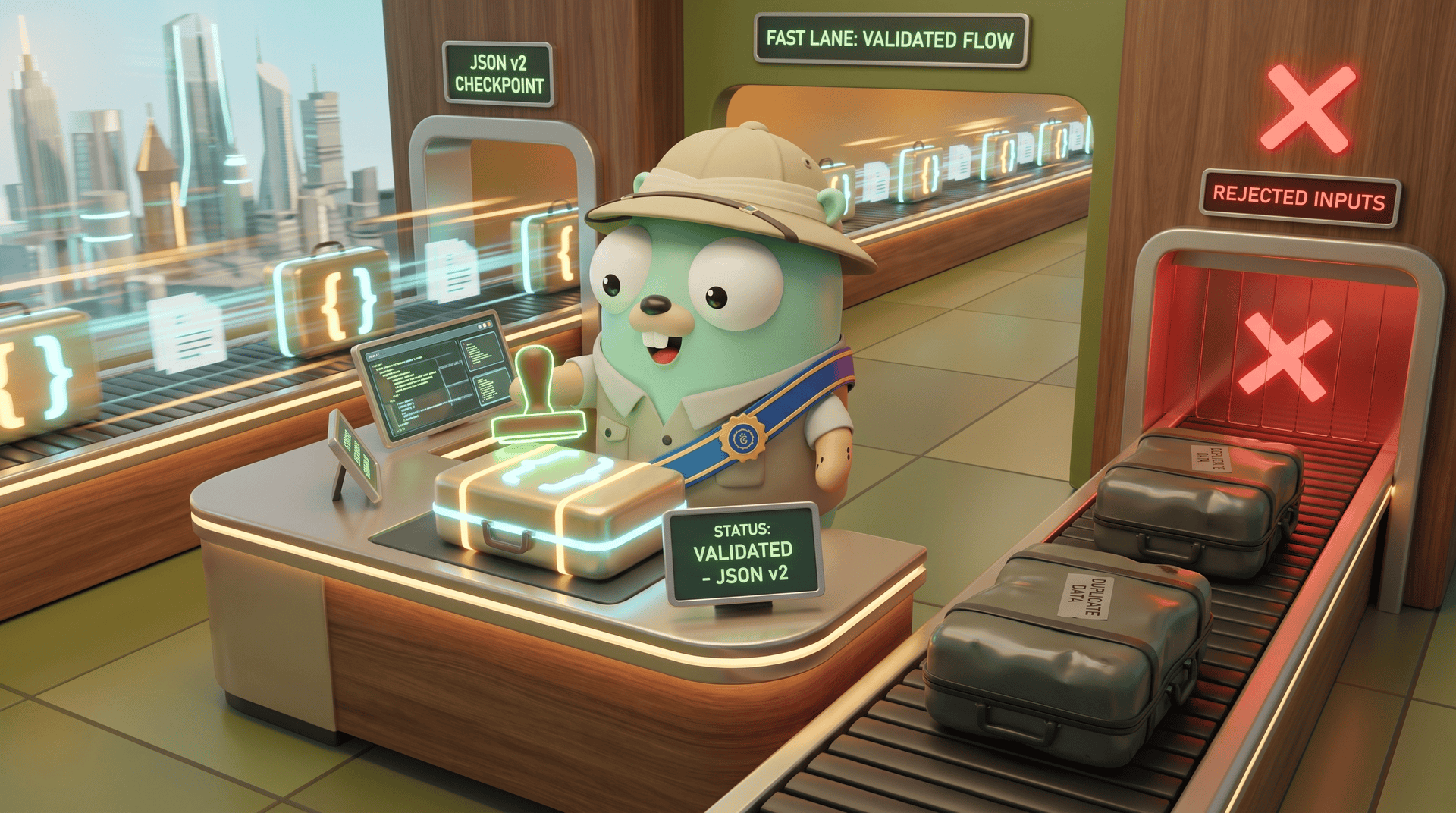
The encoding/json package is one of the oldest packages in Go (golang), and it shows. It matches field names case-insensitively, silently accepts duplicate keys, and marshals nil slices as null. We've all worked around these for years. Thankfully, Go 1.27 ships the fix: encoding/json/v2 graduates from experiment to standard library. It's stricter by default, significantly faster at unmarshaling, and your existing encoding/json code keeps working. In this article, we'll walk through what actually changes, by example.
Goroutine leaks are one of the sneakiest bugs in Go (golang). A goroutine blocks on a channel that nobody will ever read from, it sits there forever, and your memory slowly climbs until someone gets paged. The old way to find them was to stare at a full goroutine dump and guess which ones were stuck. Go 1.27 gives us something better. The runtime can now prove that certain goroutines can never wake up, and it reports them in a new goroutineleak profile. In this article, we'll write a leaky program, catch the leak with the new profiler, and fix it.